Industries
Spatial AI for depots, flight lines, and sustainment programs: robots, inspectors, and technicians working from one spatial model of the asset.
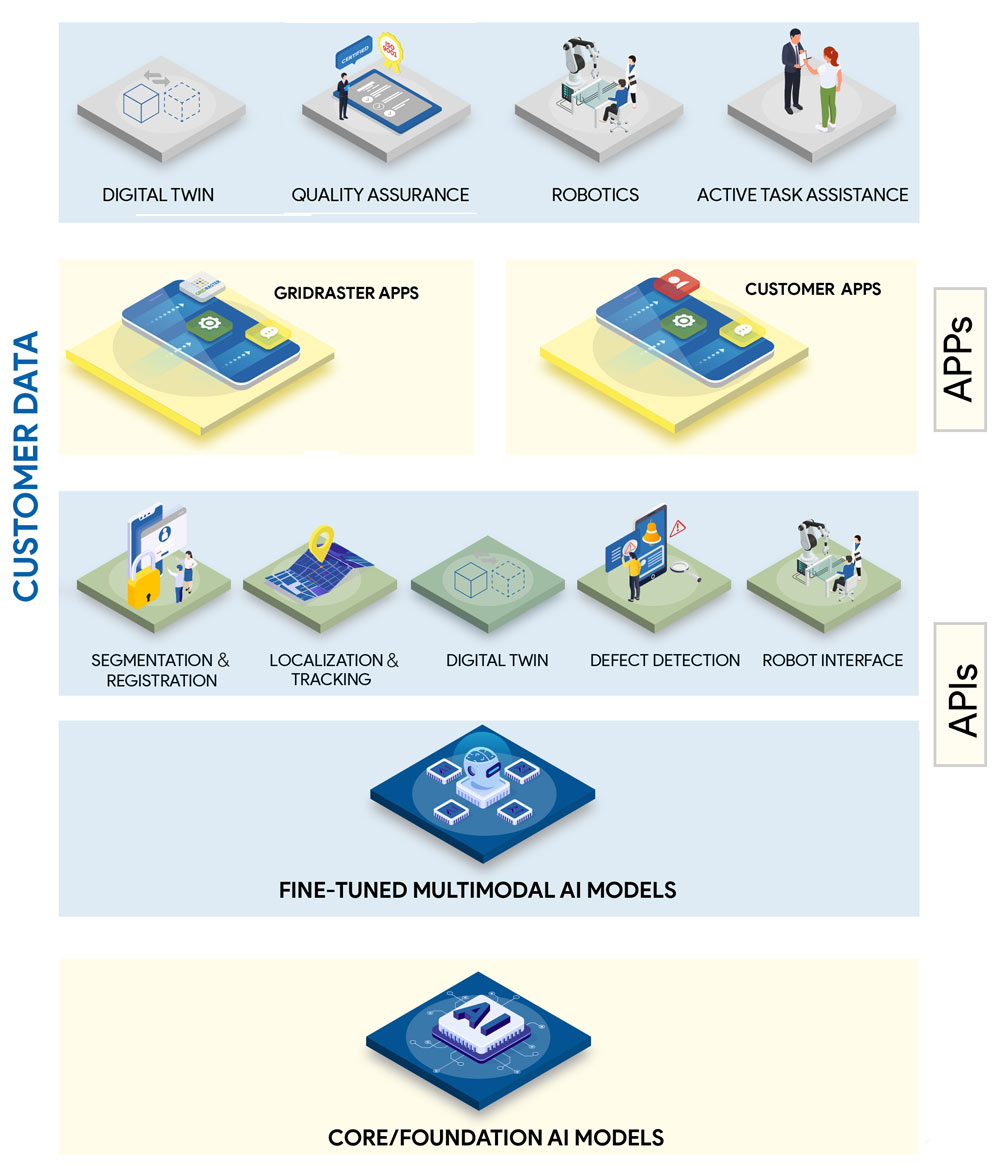
GridRaster brings Spatial AI to Air Force and Army depots, flight lines, and defense OEMs. SPIDER turns aircraft, vehicles, and weapon-system components into live spatial data that robots, inspectors, and technicians all work from: robotic setup in minutes instead of hours, every inspection finding anchored to the asset, technical data delivered on the surface at the moment of work, and all of it running on-premises or air-gapped inside the accreditation boundary you already have.
Figure: SPIDER platform architecture
Painting, de-painting, blasting, and inspection on aircraft are labor-intensive and hazardous, and every asset enters the work-cell in a different position or condition. SPIDER recognizes the asset with no markers, localizes the regions of interest and keep-out zones from the digital twin, and converts the operator’s XR selection into robot-ready coordinates sent to the controller over encrypted APIs. The technician approves each critical step before it executes, so people stay in control and out of the hazardous work.
SPIDER tracks inspection tools in real time and anchors every reading to its location on the physical part and its digital twin, on one unified data layer. An eddy-current tool has its full path traced live, a tactile tool has each capture mapped to the exact point it was taken, and X-ray plate placement is linked to the digital task order. The result is one traceable digital work record per aircraft. For the flight line, the forward-deployed SPIDER Inspection Kit brings the same record to the asset with no cloud, no internet, and no enterprise network.
Assistance is dynamic, not a static work instruction. SPIDER detects the asset, aligns its digital twin to the physical surface, and shows the target in place: X-ray plate positions, masking boundaries, camouflage patterns, and fastener locations, delivered on the asset on demand. Errors are flagged as they happen and each step is confirmed before paint, fastener, or capture, so rework is caught in-process rather than after the fact.

Products
Resources