f-15-top-spatial-header@0.5x

SPIDER: The Spatial Intelligence Platform

SPIDER (SPatial Intelligence & Dynamic Extended Reality) is GridRaster’s spatial mapping and AI platform, built for industrial and defense environments. It creates, processes, understands, and distributes 3D data as a single foundational layer, marrying static technical data with the physical asset in front of you.

Multimodal AI for Spatial Understanding, Tracking, and Augmentation

SPIDER ingests images, videos, 3D models, point clouds, technical manuals, task orders, labels, and part identifiers, then trains customer-specific models against that data. The result is spatial understanding tuned to your assets and your environment, not a generic model applied to them.

Built for Controlled Environments

SPIDER is built around three constraints that matter in defense and regulated manufacturing:

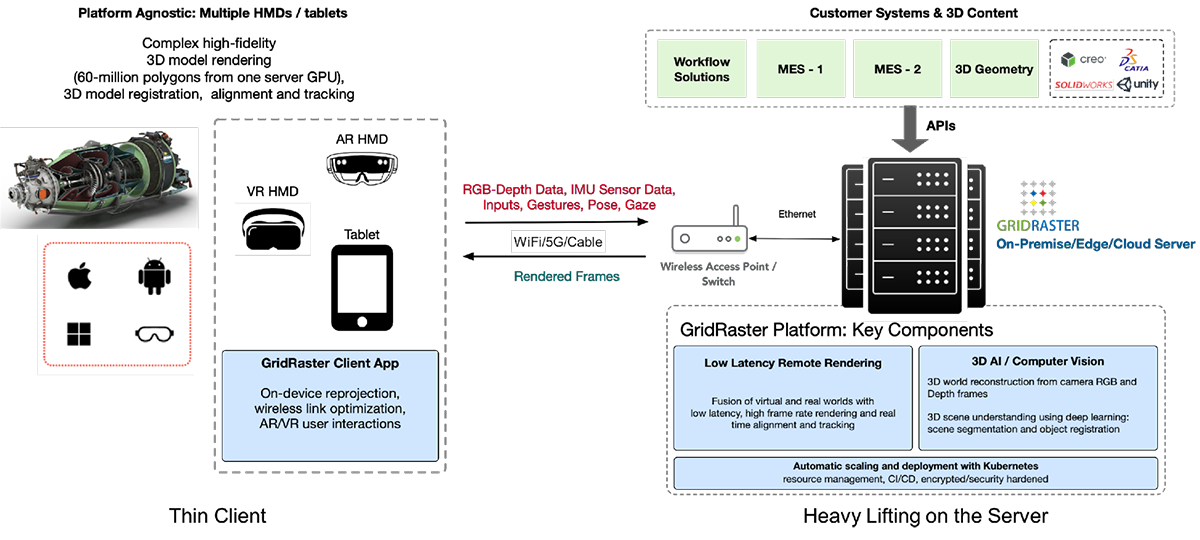
Deployment Flexibility: Runs on-premises, in a secure government or private cloud, or fully disconnected at the depot and flight line.

Data Stays Put: XR content is streamed to the device with no local storage, so technical data never rests on the endpoint.

Device Versatility: Works across Apple Vision Pro, iOS, and Android XR devices.

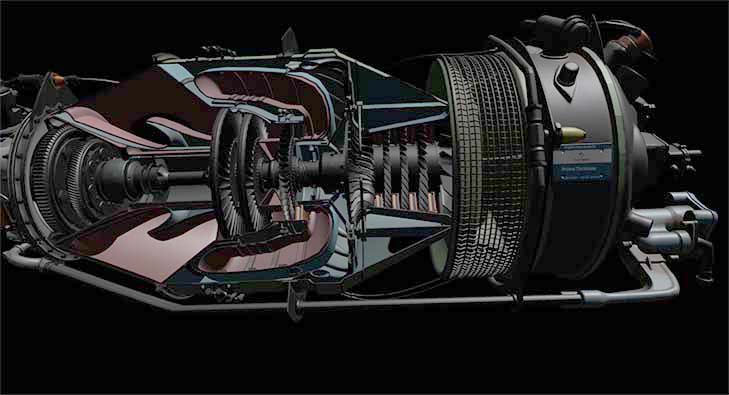
These levels of visual fidelity and performance are impossible to achieve when processing models on the edge device itself.

Real-Time Performance at Full Fidelity

Data Integrity: Syncs with PLM systems, so the model in XR is the model of record.

Third-Party Integration: Connects through standard APIs.

Searchable 3D Database: Powers AI-driven 3D object recognition and real-world overlays.

Key Benefits of the SPIDER Approach

Real-Time Fidelity

Streams high-polygon 3D meshes without decimation.

Accelerated Digitization

AI-driven 3D model generation at a fraction of traditional time and cost.

Deployment Flexibility

On-premises, secure government or private cloud, or fully disconnected.

Universal Sensor Support

Works with standard mobile devices and cameras.

.


ACHIEVE XR-READY CONTENT 

10X FASTER WITH 1/10TH OPERATIONAL COST


Critical Use Cases

CRITICAL USE CASE

Wiring Harness Verification & Validation

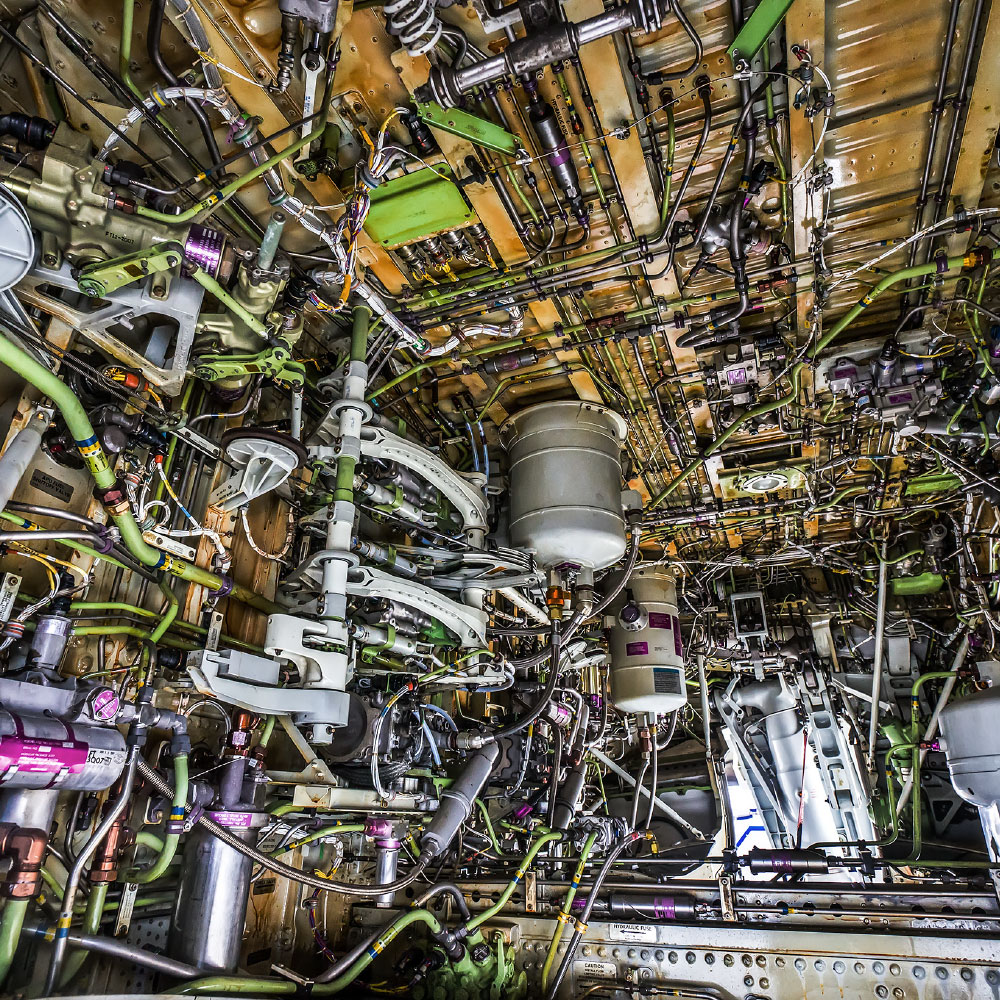
PLM systems that house the source of truth are rich, complex data structures and are traditionally challenging to “thread” into operational systems for manufacturing maintenance systems.

Wiring Harness verification and validation is a particularly challenging use case, where the intended design information is challenging to communicate in 2D format, and the possibilities for error in routing are virtually infinite.

GridRaster Spatial Computing platform tackles these challenges by integrating and streaming complex data right to the end user in XR, dramatically reducing the likelihood for errors.

CRITICAL USE CASE

Real-Time Sensor
Data Streaming

GridRaster Digital Twin leverages cutting-edge technology to provide real-time sensor data streaming, revolutionizing the way industries manage their assets.

At the core of this innovation is high-resolution “sensor” data streaming (for example, scanners) combined with algorithms that enable precise localization, mapping, and visualization of practical data and metadata.

A critical use case is defect mapping. By integrating the scanning sensor data seamlessly into GridRaster Digital Twin, users are empowered to gain unparalleled insights into the real-time condition of their assets long their life cycle. Applications include monitoring infrastructure integrity, optimizing maintenance schedules, or facilitating rapid response to defects.

GridRaster Digital Twin sets a new standard for asset management efficiency and effectiveness.
CRITICAL USE CASE

PLM System Integration

Traditionally, Product Lifecycle Management (PLM) systems, which store product geometry and metadata, and real-time XR experiences have functioned independently.

This separation limited the potential of XR applications in manufacturing and maintenance, especially for the aerospace, defense, and automotive industries where PLM is the crucial source of product truth.

GridRaster Workspace bridges this gap by seamlessly streaming PLM data into XR without extensive de-featuring, allowing users to experience rich product data from PLM systems within their real-time XR workflows.